1982: Montgomery Finally Takes Flight

John J. Montgomery High’s football history does not require an encyclopedic tome.

A few pages would be more than enough.

Most of those pages would be devoted to the 1982 season.  Coach John DeVore’s Aztecs posted a 9-2 record, the best in their history and one of the few winning seasons since the  Otay Mesa school opened in 1970.

Poets and rhapsodic observers might be moved to exclaim that Montgomery’s success under DeVore not only was rare, it was kismet.

The DeVore name resonates in the South Bay region.  John followed a path similar to that of Chet DeVore, his legendary father, who is remembered for football success at Chula Vista and for a long and respected tenure in administration.

When he retired in 2010, John DeVore had been principal at Sweetwater Union district schools Southwest and Olympian and had posted the best record ever for a Montgomery coach.

DeVore was the third head coach in Montgomery history.  His won-loss record of 49-35-5 from 1976-83 has not been approached.  Julio Alcala’s 35-47-1 is next.

MONTY’S YEAR?

Big enough, fast enough, and fairly deep, Montgomery was 6-0 in nonleague games and went to 9-0 overall and 3-0 in Mesa League play with a dramatic, 20-17 victory over visiting Castle Park.

Behind for the first time all year, the Aztecs had the ball on the 16-yard line of Castle Park and trailed, 17-13.  Quarterback Bernardo Vasquez scrambled and hit Joe Clifton for the winning score with a minute left in the game.

Clifton was the fourth or fifth receiver on Vasquez’ progression list.  Star wideout Art Ramsey was roughed up out of bounds at the end of the first quarter, then was ejected for retaliating.
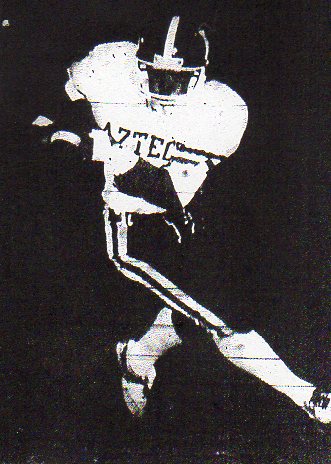
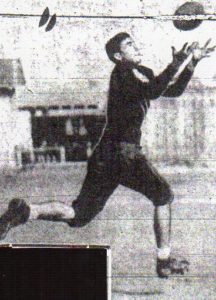
JoJo Yamane gained 13 yards on this pass play and  was on receiving end of 35-yard touchdown pass in Montgomery’s loss to Sweetwater.

SWEETWATER PREVAILED

Victory over the traditionally difficult Trojans was a formidable achievement, but not enough. Old nemesis Sweetwater won the league championship the following week by defeating the Aztecs, 20-6.

Montgomery didn’t give in to James Primus, the County’s leading rusher, who scored 6 touchdowns and rushed for 305 yards in his previous game.

The bigger Red Devils came at their lighter opponents with repeated student body power sweeps, but Primus had to work, rushing 29 times for a hard-earned 115 yards and one touchdown as Sweetwater broke a 6-6 tie in the fourth quarter.

Montgomery’s season ended when Morse, another rugged squad, took a 13-12 decision in the first round of the San Diego Section AAA playoffs.

Misfortune struck the Aztecs on the second half kickoff when Darryl Rosette ran 90 yards for a touchdown and a 13-6 Morse lead after Montgomery had outplayed the Tigers throughout the first half.

PRACTICE NOT PERFECT

The Aztecs practiced kicking away from the dangerous Rosette all week, and then unintentionally kicked to him.

Monty struck back with a 14-play, 69-yard touchdown drive but a two-point conversion attempt was unsuccessful and a bad snap from center aborted a late field goal attempt that could have the won the game.

“Most teams didn’t throw,” said DeVore, who played quarterback in high school at Hilltop.  “We had a good quarterback, a good offensive line and really strong wideouts.

“Beating Castle Park before a sold out stadium was a real high point.  I think the difference between us and Sweetwater is that Sweetwater had been in that type of game and we hadn’t.”

JOHN J. WHO?
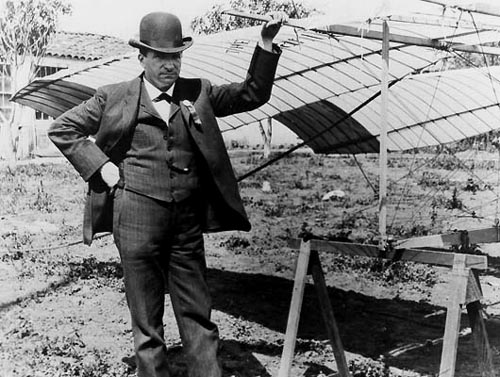
Crowned with a bowler, John Montgomery is a jaunty, if dour, figure next to his aircraft..

Montgomery High is named after a Northern California aviator who became airborne two decades before the Wright brothers.  Montgomery piloted a glider from a hill on Otay Mesa in 1883, near where the school campus sits today.

As there were no independent observers of Montgomery’s flight some aeronautical historians doubted the feat. It was not recognized until 1894.

According to historian Donald Harrison, aviation pioneers conducted their tests in great secrecy in order to be the first to bring their inventions to the patent office, so only relatives claimed to be witnesses to Montgomery’s 600-foot flight in a flying machine with curved wings.

Montgomery was killed in 1911 in a crash of another glider and is buried near San Francisco.

Several schools here and the Montgomery airport on San Diego’s Kearny Mesa honor his name. The wing of a World War II era plane stands upright on the hill in Otay Mesa, where John J. was said to have taken flight.

WRITER CALLS TIME

Visiting San Pasqual and Torrey Pines were earnestly going at it early in the season’s opening game.  A late arrival was The San Diego Union reporter Steve Brand, who looked at the scoreboard and noted that 12 minutes, 30 seconds remained in the first quarter.

As the Evening Tribune’s Bud Maloney explained, “In the tenor of ‘What’s going on here?'” Brand quizzed colleagues on the field, who hadn’t noticed.

Brand continued to pose the question as he watched the teams play a 15-minute quarter, okay for college and pro games but 3 minutes more than for high school.

The scoreboard clock lined up at 15:00 when the second quarter started.

Brand couldn’t stand it any longer.
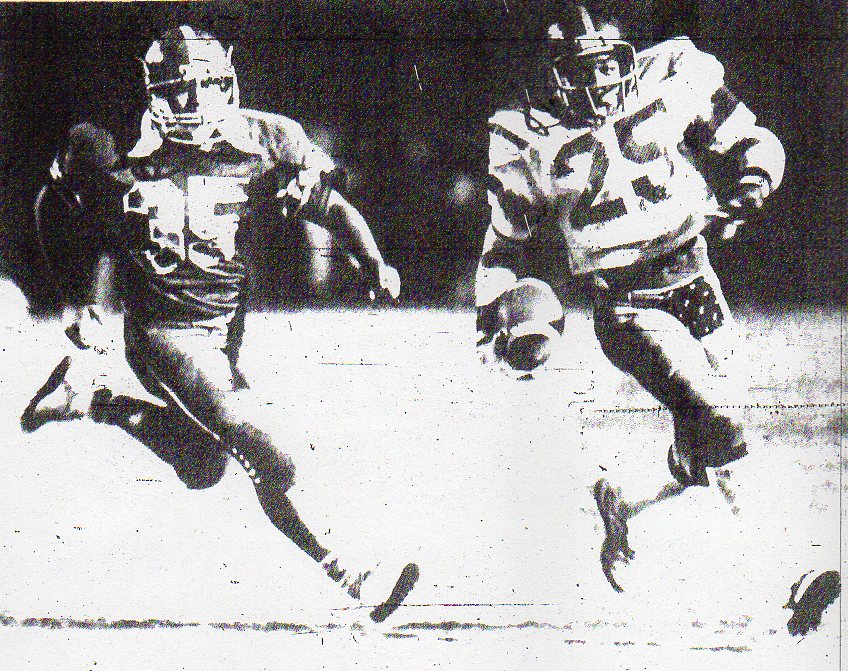
Eric Allen was known as ball-hawking pass defender in 14 NFL seasons, but he rushed 67 yards on this play to set up touchdown in Point Loma’s 30-27 win over Clairemont, whose Wayne Coburn pursued.

COACH SURPRISED

The veteran scribe made his way into into the Torrey Pines bench area, seeking out Falcons coach Ed Burke.

Brand, voice rising:  “Are the high schools playing fifteen-minute quarters now?”

Burke, puzzled by Brand’s presence and by what the coach considered a peculiar question:  “Ah, no, we still play twelve minutes.” Brand:  “Well, you’ve just played a fifteen-minute quarter and it looks like you’re going to play another.”

Burke blinked as he looked at the scoreboard clock, then hailed the closest official and pointed to the scoreboard. Arm-waving and more pointing continued as other officials and San Pasqual coach Bob Woodhouse joined the conversation.

IRRIGATION SYSTEM PART OF PLAY

The game timekeeper was summoned and an official conference was called. There was discussion about a nine-minute second quarter but agreement was finally reached on the regulation 12 minutes for the last three quarters.

As if on cue, water sprinklers came on just before halftime, adding to a comedic scene.

Fortunately the teams were at the other end of the field and a valve was shut off before the contest had to be stopped.

San Pasqual won the 51-minute game, 21-16. One of  the longest regular-season, non-overtime high school contests in San Diego history.  Quarters were 15 minutes for many years decades earlier.

NEW CENTURIONS AND OTHERS
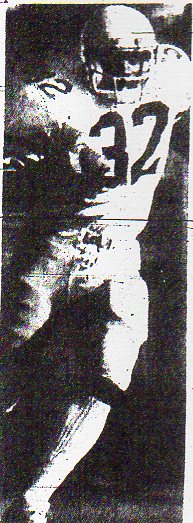
Serra rode with Earl Williams, who averaged 125 yards rushing.

University City High, which opened in 1981, played a varsity schedule for the first time.  Mission Bay High played games on a home field for the first time since the school opened in 1953.  New lights were in at Fallbrook and “not quite” in at Southwest.

Sixty-four light banks, at $315 each, were needed to illuminate the field at Fallbrook.  Twenty-thousand dollars was raised as the money was collected in shares of $315 each.

JUST FINE, THANK YOU!

The question was posed to Helix coach Jim Arnaiz:  “What’s life like without Jim Plum, Allan Durden, Karl Dorrell, and Dan Hammerschmidt?”

Helix answered with an opening, 30-6 win over Patrick Henry and rolled to a 12-1 record, and topped Mt. Carmel, 10-6, in the 3-A championship at Southwestern College.

The Highlanders weren’t rebuilding but reloading.

Arnaiz’ big four led Helix to a combined 29-4-1 record in the last three seasons, but Scott Webb, who replaced Plum at quarterback; running back Steve Webster, receiver Tony Necoechea, and defenders Chuck Cecil, Deron Webb, among others, stepped up.

Cecil, also a dangerous kick returner, transferred in the previous winter from the Central Section’s Hanford in the San Joaquin Valley.  Cecil’s hard-hitting reputation followed him to the University of Arizona and into the NFL, where he played and coached.

SCOTS’ SCOTT

Scott Webb’s point after and field goal were the difference as the Highlanders won their 51st game (against 7 losses and a tie) in the last five seasons, defeating Mt. Carmel, in San Diego Stadium.

Webb stepped in at quarterback this season after sitting behind Jim Plum since Scott was a freshman and directed the Scots to a dozen wins, many of which positioned by his solid leadership and by his kicking leg.

Webb scored 3 touchdowns, 41 points after, and 12 field goals for 95 points, fourth in the San Diego Section. He set a Section record with 5 field goals (plus two extra points for a record 17) in a 29-0 victory over Granite Hills.  Webb’s career totals included 120 points after and 29 field goals.
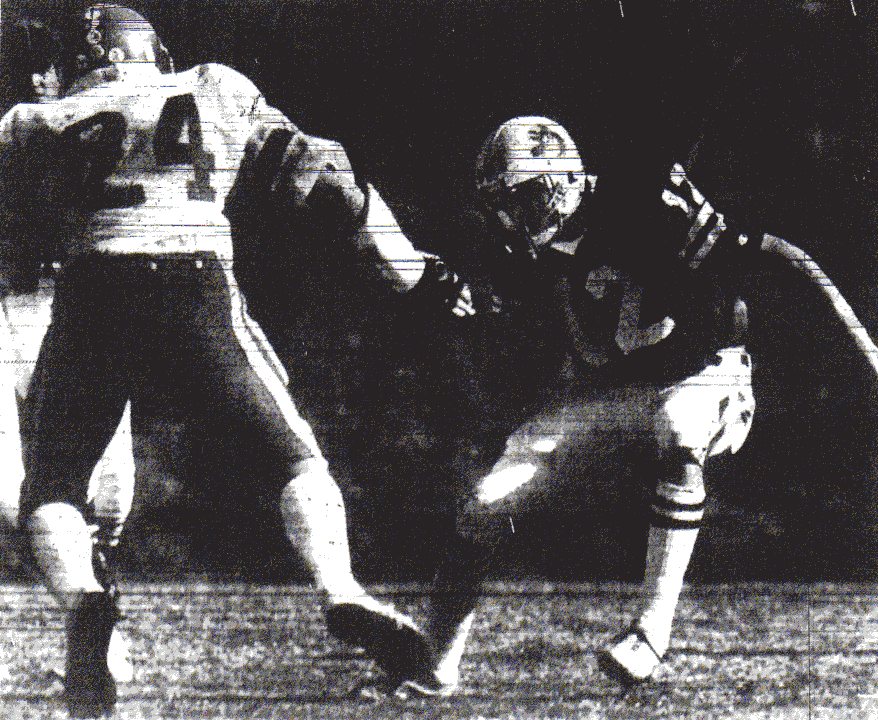
Future NFL player and coach Chuck Cecil (right) returned punt for Helix as Mt. Carmel’s Don Gassoway went for Cecil’s first move.

NOT DECLAWED DESPITE RECORD

Coach Dick Haines’s Vista Panthers were only 4-6 but they scored one of the biggest victories in program history, knocking off the state’s third-ranked team, Huntington Beach Edison, 6-0, in Week 2.

A crowd of 8,000 at Vista watched as Scott Black kicked 47- and 43-yard field goals in a span of 49 seconds in the second quarter to end the Chargers’ 36-game, regular-season winning streak.

Five of Vista’s six losses were to teams with a combined record of only 24-29-2, but the Panthers also defeated Morse, a 8-4 playoff semifinalist, 23-14. They lost to 2-A champion El Camino,12-0, and 3-A finalist Mt. Carmel, 27-10.

FLAT FINALE

When regulation play ended and Point Loma and El Camino were tied, 6-6, in the 2-A championship, the 6,000 fans in attendance at Mt. Carmel High expected an overtime session and let their displeasure be known when CIF commissioner Kendall (Spider) Webb declared the teams co-champions.

Playoff rounds through the semifinals have overtimes because one team has to advance.  Fans were expecting a tie-breaker, although no provision had been made for one. It was the second championship tie in the 23 seasons of the CIF San Diego Section.  Escondido and San Diego deadlocked at 21 in 1969.
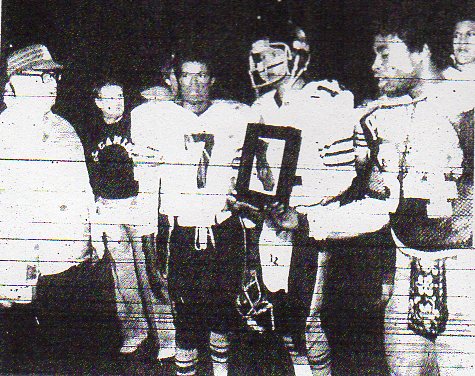
Point Loma coach Bennie Edens, El Camino mentor Herb Meyer, Wildcats Tyrone Pope (7) and Ryan Beadle (helmet), and Pointers’ Rocky Gailord (from left) don’t appear enthused at trophy ceremony “celebrating” tie for 2-A championship.

WIN ONE FOR THE BENNIE

His coaching career at Point Loma was in season number 28 and Bennie Edens said he’d never witnessed anything like the Pointers’ big Western League win over Clairemont.

“I told the kids at halftime that whether we won or lost I was prouder of them than any team I’ve ever coached,” said the Bennie.  “I’ve never seen anything like it, being hit like we were and then coming back to win.”

Clairemont scored on the first two plays it possessed the ball, Chris Hardy running 71 and 49 yards for touchdowns.  The Pointers fought back, going 58, 76, and 58 yards for a 19-13 halftime lead. The lead switched twice more before Clairemont etched a tie at 27 with eight minutes left in the game.

After Eric Allen ran 67 yards to the Chieftains’ 9, Point Loma’s David Rod kicked a 25-yard field goal. Rod’s kick gave the Pointers a final, 30-27 advantage as the teams, apparently spent, did not score in the final 7:06.

CAVERS LEGEND FEELS PAIN

One week after the crushing loss to Point Loma, Clairemont took out its disappointment on San Diego, 76-6, prompting a call from writer Steve Brand to retired Cavers coach Duane Maley.

The Cavers were 97-19-2 under Maley from 1948-59 but their program had not been the same since.

“It’s incredible that it could happen to a school with such a rich history,” said Maley.  “I believe the type of athlete attending Sn Diego High has changed.  It’s sad the program has slipped to that level.”

Maley did not point a finger.  “I know (Clairemont coach) Steve Miner and he purposely wouldn’t run the score up on anyone.  He’s a fine young man.”

The widest margin of victory for a Maley-coached team at was in a 59-0 victory over La Jolla in 1958.

“It’s foreign for a coach to tell his players not to play hard,  to tell a fourth stringer to ease up,” said Maley.  “We tried to let everyone play when the game started to get out hand, and we had more players then.”
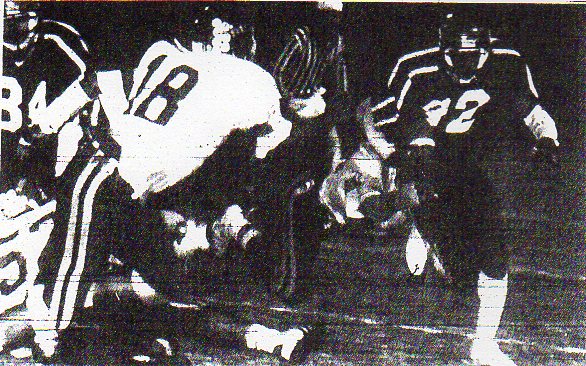
James Primus’ (right) total of 176 points had been bettered only once in San Diego County, by another Sweetwater player, Leroy Brown, who had 178 in 1972.

POINTERS, SUNDEVILS, AND NFL

Probably 300 to 400 San Diego-area preps have landed on active rosters in the NFL or other pro football leagues, beginning with San Diego’s Brick Muller with the 1926 Los Angeles Buccaneers and Russ Saunders with the Green Bay Packers in 1931.

Few have surpassed the career of Eric Allen, a standout on Bennie Edens’ 11-0-1 Pointers and  a second-round draft choice out of Arizona State, the 30th player selected in the 1988 NFL draft by Philadelphia.

Allen played 14 seasons for three teams, is in the all-time top 15 with 54  pass interceptions, with eight touchdown returns; earned 6 Pro Bowl berths, and played in 214 of a possible 217 games.

TRUE GRID

The 3-A championship was played in the afternoon at Southwestern College…high rent costs forced the 3-A and 2-A  games out of San Diego Jack Murphy…El Camino coach Herb Meyer called his team the “Dirty Thirty”…the Wildcats never dressed out more than 30 players and sometimes less…a week after resigning at the end of the season  to spend more time with his family, Patrick Henry coach Dale Twombley was replaced by longtime assistant Walt Baranski…Baranski was a Hoover graduate, class of 1957;  Twombley was Hoover, ’63…Edens on  the 2-A tie:  “I would have loved to win and of course Herb feels the same way, but perhaps a tie is fitting; we had a great game between two great teams”…Meyer:  “A tie is what we deserved, as bad as we played”…Edens was the Section’s senior coach, followed by Meyer (24 seasons), La Jolla’s Gene Edwards (23), and Vista’s Dick Haines (13)…Point Loma went undefeated in the regular season for the first time since 1939…Ronnie Lewis was successful on Morse’s first field goal attempt since 1977, a 26-yarder in the 10-6 win over Madison…Monte Vista standout Herb Duncan showed some of the moves that reminded Chargers fans of his dad, the great punt returner and defensive back Leslie (Speedy) Duncan…Morse and Serra played in the second annual Friendship Bowl and were the only city schools playing 10 regular-season games…Bennie Edens of Point Loma and John Shacklett of Morse started the series in 1981…Morse topped Serra, 20-7….

..


1932: “I Want to Play Football at San Diego High”

Coach Hobbs Adams was in his office a couple years before, finishing some paper work

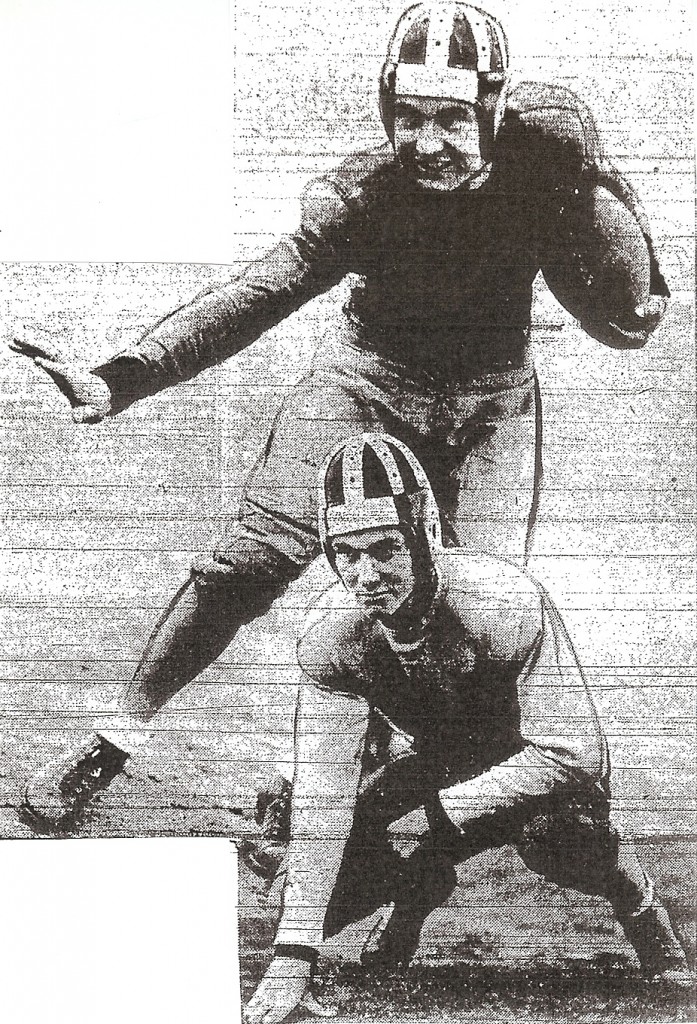
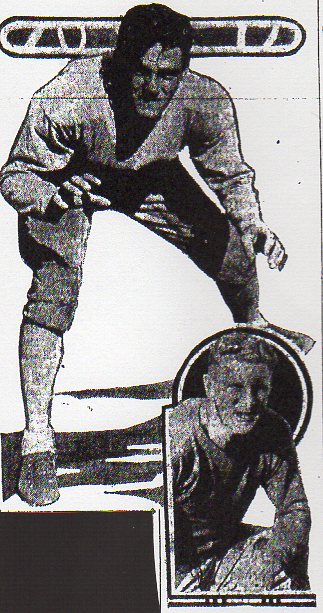
San Diego coach Hobbs Adams (insert), with tackle Gerard Burchard, looked back as he prepared for Santa Ana.

during the quiet of the Christmas vacation break.

A strapping youngster walked into the school’s recently constructed gymnasium and found Adams at his desk.

The visitor told Adams he was from Texas and wanted to play football at San Diego High.

Adams was curious.

The coach and the boy spoke for almost an hour.

At length Adams convinced the young man that he should return home to his parents.

Adams went so far as to helping purchase a train ticket that would take the youngster north to Los Angeles and then east.

The train stopped in Santa Ana.  The youth got no further.

Earle (Tex) Harris made another visit, to coach Gerald (Tex) Oliver at Santa Ana High, enrolled in school, and became an all-Coast League end in 1931.

Adams related the moment to Charles Byrne of The San Diego Union as the Cavemen were getting ready for their annual battle with the Saints.

Word had reached Adams that Harris had been declared ineligible at Santa Ana through enforcement of the “nine-semester” rule.

Harris, it was learned, had played football three years before at a Texas military school.  He had attended high school for at least eight semesters, exhausting his athletic eligibility.

Harris’ and Santa Ana’s loss was not the Cavemen’s gain.

In the midst of a 24-game unbeaten streak, the Saints defeated San Diego, 6-0, and advanced to the Southern Section championship  before losing to Inglewood, 14-0.

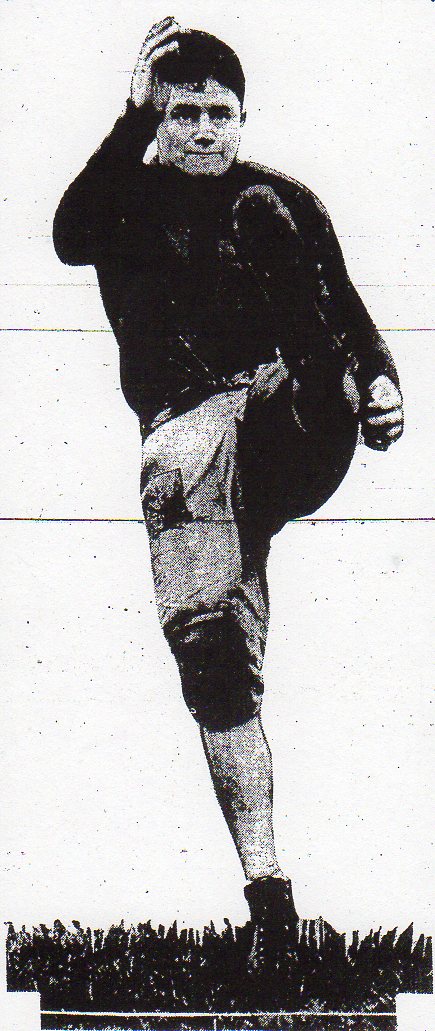
Morris (Mushy) Pollock, who later was standout at California-Berkeley, used his 132 pounds for many tasks in coach Hobbs Adams’ offense and special teams.

SAY WHAT?

San Diego’s starting 11 players averaged only 151 pounds, making for its lightest team in years.

“We won’t get to first base unless we block,” Adams said, frowning but unaware that he was mixing his metaphors.

WHO’S IN? WHO’S OUT?

San Diego was out of the playoffs for the seventh consecutive season, denied by some tough Coast League rivals.

Hoover won the four-team City Prep League and coach John Perry and principal Floyd Johnson petitioned the CIF for inclusion in the major division playoffs.

Hoover was granted the step up, but Coronado, undefeated and champion of the Southern Prep League, was denied a similar request.  The Islanders then prepared for a playoff against Wildomar Elsinore.

CARDINALS FLY

Hoover surprised, winning its first-ever playoff, 7-6,  at Los Angeles Loyola, which had won its league with a 7-0 record.

Hoover coach John Perry “laughed” when he learned that Loyola employed an unheard of four-man defensive line, as most teams deployed six linemen.

Perry said the way to defeat the 4-man line, which did not become popular until the 1950s in the NFL, was with straight ahead, power running.

The Cardinals didn’t win with offense.

Hoover’s Jack Beal launched a punt that traveled 70 yards to Loyola’s two-yard line. Possession was akin to holding a hot potato.  Loyola immediately punted back on first down.

Beal received the punt on Loyola’s 30-yard line and raced to Hoover’s lone touchdown and kicked the winning point after.

The Cardinals, who returned 18 lettermen from the 1931 City League-championship season, prepared to take on the winner of Brea-Olinda-Anaheim in the quarterfinals.

Not so fast.

CIF BOSS STEPS IN

CIF commissioner Seth Van Patten, after returning from an Amateur Athletic Union meeting in New York, apparently did not like the pairing.

Van Patten assigned the Cardinals to a game at City Stadium  against Santa Ana.

Hoover emerged with strong performances by Jack Beal (above) and Brad Chaffin.

Santa Ana had beaten Hoover, 13-0, earlier in the season. The Saints made their third trip South and, after a sluggish first half, scored 26 points after intermission and won, 33-0.

The Elsinore game did not materialize for Coronado, which then awaited the champion of the Imperial Valley League.

George Herrick of the Evening Tribune a few days later wrote that Coronado was “unable to get a booking from the CIF or schedule a practice game.”  The Islanders turned in their gear, secure with a 5-0-1 record.

ESCONDIDO BACKS IN

Escondido, which tied Coronado, 6-6, in the regular season and was runner-up to the Islanders in league play, dropped a 7-6 decision to Orange in its final game.

Season over? Not quite.

Cougars principal Martin Perry announced that coach Harry Wexler’s squad would go to Brawley to play the Imperial Valley League champion for the Southern Section Southern Group title for small schools.

The Cougars would be appearing in their second finals in the last three seasons, having lost to El Centro Central, 20-6, in 1930.

Brawley won, 27-13, and created an unhappy end for Cougars halfback Ed Goddard, who completed an outstanding, four-season career.

Goddard earned an astounding 14 letters, four each in football, baseball, and track and field, and two in basketball.  A fast, breakaway runner, Goddard was equally renowned as a punter, adept at “coffin corner” kicks and many which were said to travel from 50-80 yards.

Goddard  continued on to Washington State, where he won all-America honors and was the second selection in the first round by the Brooklyn Dodgers in the 1937 NFL draft.

CAN YOU HEAR US?

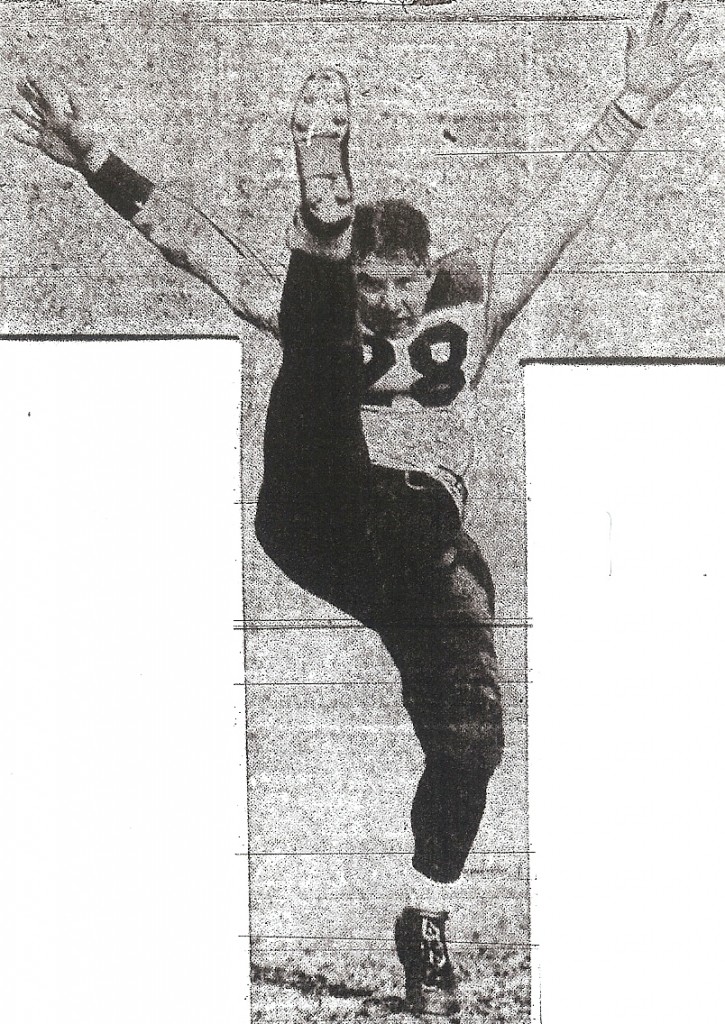
Ed Goddard was Escondido’s triple threat.

Football was making progress regarding, to use a modern expression, “in-stadium entertainment.”

The San Diego Union and Evening Tribune again announced that they would sponsor a public address system at City Stadium for San Diego High and San Diego State games.

Local personality Hal Brucker would give the fans a play-by-play report on downs, distances, penalties, etc. Former Hilltop gridder Ed Ruffa was behind the mike when a P.A. was believed to have been installed for the first time in 1931.

Oceanside also employed a public address for its big Southern League game against Grossmont.

HONORS

San Diego quarterback Morris (Mushy) Pollock, all of 132 pounds, was named to the first all-Southern California team. Pollock was the only local player on the four squads.

Six writers, representing teams in their newspapers’ respective circulation districts, voted for Pollock and lineman Walt Beerle for the first all-Coast squad. Ed Knapp and Don Collison were on the second team.

WHAT GOES AROUND…

Lawrence Carr replaced Clair Seeley at La Jolla and Seeley moved to Point Loma to teach in the classroom and assist head coach Lawrence Purdy.

Purdy returned from a one-year hiatus at Point Loma, succeeding Algy Lambert, who took over for Purdy in 1931.  Lambert  moved to Pacific Beach Junior High and eventually coached Kearny in 1945.

Yuma, Arizona, which dropped a 25-7 decision to Hoover under a heavy nighttime fog at Navy Field, was coached by former University of Arizona athlete Marvin Clark, who became coach at La Jolla in 1937 and later the principal.

SIGNS OF THE TIME

The CIF added the football throw to the state track meet and discussed recognition of horse shoes as an interscholastic sport.

The CIF also made starting blocks mandatory in track and held the first cross-country championship.  Thigh guard pads were required in football and a pay ceiling of $10 was established for game officials.

Commissioner Seth Van Patten’s office was embroiled in its first legal challenge when Covina High sued over an issue of playoff receipts.

San Diegans had no sympathy for Covina, which cheated with the use of ineligible players in its 1925 title win over the Hilltoppers.

“GASOLINE BUGGIES” TO RACE

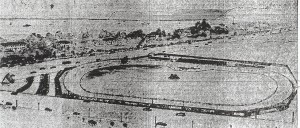
Artist’s concept (below) is of an auto racetrack that was to be built fronting Barnett

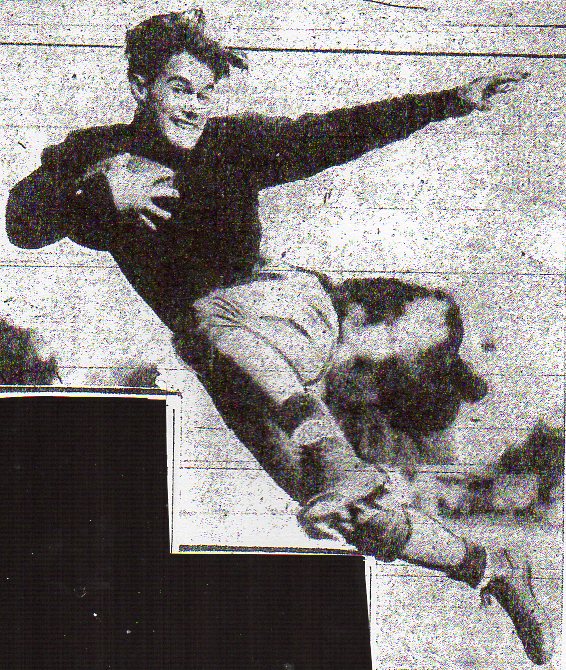
Jimmy Blaisdell was star of Amos Schaefer-coached Coronado Islanders

Avenue and the “Causeway” and would be across the street from the Marine Corps Recruit Depot and the former Ryan Airport.

The 5/8th mile dirt course would be similar to the Ascot course in  the Los Angeles area, said the local promoter.

BLAMES DEPRESSION

Harvey Fall, 70, of San Diego hurled a crude bomb over a transom into the offices of a stock brokerage located on  Third Avenue at Plaza Street about 5 a.m.

The disgruntled investor told Police Captain Harry Kelly that “I wish I could have done this on Wall Street.”

No one was hurt but the explosion rocked the downtown area and caused about $10,000 damage to the building.

Fall said the fuse had been activated when he held the explosive. “It I had held it a minute longer I would have been killed,” he said.

WHERE’S THE OFFENSE?

Southern League schools played a round-robin schedule of 10 games.  Six concluded with scores of 7-0 or less and another was 9-0.

Mountain Empire’s games did not count in the standings, as the Redskins played only when one of the other four had a bye.

WRITER FEELS EXCITEMENT

The lead paragraph in The San Diego Union following the season’s opening game:

“In one of the most spectacular climaxes ever witnessed in a high school football game in San Diego County, Oceanside defeated Garden Grove of Orange County on the Pirates’  field yesterday, 15-12….”

The score actually was 13-12, but no less exciting.

Thompson of Oceanside intercepted an Argonauts pass on his 16-yard line with 1:40 remaining in the game and Thompson’s squad trailing, 12-6.

“Following a series of off-tackle smashes and with less than five seconds to play, Stevenson fought his way over right tackle for a touchdown to tie the score,” the Union report continued.

“Thompson, fullback, then proceeded to put the game on ice by smashing over right tackle for the extra point.”

The game actually turned after a third quarter touchdown put Garden Grove ahead, 12-6.  The Argonauts converted but the point was canceled by an offside penalty.

HAND-ME-DOWNS

Writer George Herrick wrote that the Santa Ana-San Diego game “has all the earmarks of a pocket-sized Notre Dame-Southern California battle”.

Santa Ana used the Knute Rockne Notre Dame Box system and the Hilltoppers employed the “mystery” shift of Howard Jones’s Trojans.

Hoover didn’t pass often, but Lee Fountain had sure hands.

LOSE BATTLE OF BOOKS

Approximately 75 per cent of San Diego State’s freshmen team was declared ineligible, costing a game San Diego High had scheduled against the Frosh.

The Southern California Intercollegiate Athletic Conference rule stated that “ineligible men are not to be used in any games, whether they are conference or not.”

Aztec coach Morris Gross then scheduled a scrimmage with his remaining players against Hobbs Adams’ Cavemen.

TRUE GRID

That’s San Diego Bay and Barnett Avenue in distance and Pacific Highway (with autos) in foreground.

Sweetwater officials made a media request often repeated: “Call us Red Devils, not Sweeties”…student body president Dean Gardner had announced the previous December that the school officially was adopting Red Devils,  but newspaper habits were hard to break…future politicians Lionel Van Deerlin (U.S. Congress) and Ivor DeKirby (State Assembly) were on the rosters of Oceanside and San Diego, respectively……San Diego’s 30-6 win at Phoenix before more than 4,000 persons was the Coyotes’ worst loss in a decade…coach Hobbs Adams took the Cavemen to Arizona by bus and had them work out behind locked gates in the evening…Adams wanted his team to get used to lights…an otherwise uneventful San Diego season ended when the Cavemen were stopped inside the one-yard line as the game ended at Long Beach with Poly a 7-6 winner…a handful of Grossmont athletes defeated Mountain Empire, 26-0, and then those Foothillers who didn’t get into the game, topped Hoover’s Reserves, 20-0, in the nightcap of the afternoon doubleheader…a intersectional match between Brawley and St. Augustine was canceled because of a “misunderstanding of schedules”…Escondido’s Ed Goddard raced 105 yards with a Sweetwater interception to highlight a 28-13 victory….


2014-15: Saints Can Look Ahead With Confidence

Wait till next year seems appropriate in San Diego Section basketball, according to the Cal-Hi Sports newsletter.

The Stockton-based publication is suggesting that St. Augustine could be a Top 20 team in the 2015-16 season.

That would be an accomplishment, since no San Diego squad finished in Cal-Hi Sports’ Top 20 this season.

St. Augustine was 23rd, Torrey Pines 24th, and Foothills Christian 26th in the online publication’s final top 40.

La Jolla Country Day was 15th in the girls’ ratings, Mission Hills 30th.

“”Pencil in the CIF San Diego Section Open Division champs (St. Augustine’s Saints) as a State Top 20 team next season, with five returning starters, including freshman standout Taeshon Taylor,” wrote Cal-Hi honcho Mark Tennis.

“The game that boosts the (Torrey Pines) Falcons up for the final rankings was their 54-49 win over No. 25 Long Beach Poly in one of the bigger upsets in the SoCal regionals,” said Tennis.

St. Augustine and Torrey Pines had not been ranked in prior Cal-Hi ratings.  Foothills Christian jumped from 35th after a one-point loss to Rancho Cucamonga Etiwanda (No. 5) in the regionals.

La Jolla Country Day’s girls achieved a lofty position with the poorest record (18-11) of any Boys’ or Girls’ Top 20 club.

“Anyone who saw the Torreys in person (on television or at the University of California’s Haas Arena) could see this is a team of the future that arrived in the state playoffs,” said Tennis.

“Because of injuries to several girls, including promising sophomore Alaysia Styles, 2012 coach of the year Terri Bamford had to retool the team,” Tennis noted.  “LJCD definitely will be the top preseason team to beat from the San Diego Section.”


2015: Art Powell, Member of Legendary Family

Oakland Raiders managing general partner Al Davis spoke in 2006 about Art Powell, whom Davis signed out of the Canadian Football League years before.

“I wish I could take you back to 1963,” said Davis, “because I had one of the greatest receivers who have ever played this game.  His first year for me, he carried us.”

Powell caught 73 passes and scored 16 touchdowns as the Raiders, under first-year coach Davis, improved their record from 2-12 to 10-4.

Powell played one season in Canada and 10 seasons in the AFL and NFL and was a member of the all-American Football League team for the decade of the league’s existence, 1960-69.

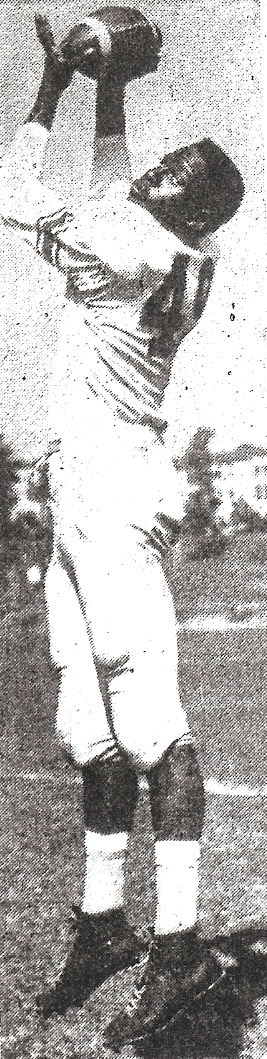
Powell was one of the Southland's best players in 1954.
Powell was one of the Southland’s best players in 1954.

Powell recently passed away at age 78 in Aliso Viejo in Orange County, where he and his family had resided many years.

A 6-foot, 3-inch, 210-pound receiver as a professional, Powell was the third in arguably the most gifted family of athletes in San Diego history.

His older brother Charlie earned an unequaled 12 varsity letters at San Diego High.  Ellsworth Powell was a standout basketball player at San Diego, and younger brother Jerry was the San Diego Section football player of the year at Lincoln in 1967.

Art Powell caught 479 passes in his NFL-AFL career.  His 81 touchdowns represented one touchdown for every 5.9 catches.

Powell was all-Southern California in 1954 at San Diego and was the City League player of the year in basketball in 1954-55.

A proud and principled man, Powell stood up when others sat.

Powell was one of the first to balk when black players were not allowed to stay in white hotels with the rest of their teammates in the days when pro athletes experienced segregation and discrimination.

Powell was on the verge of quitting at San Diego High in 1954, upset at head coach Duane Maley, who had elevated Powell from the junior varsity in 1953 but then played Powell sparingly.

It was Powell’s teammate; quarterback Pete Gumina, who prevailed on the youngster to stick it out.  Powell responded with an outstanding season.

As a sportswriter for the San Diego Evening Tribune, I interviewed Powell after the Raiders had beaten the Chargers, 34-33, in Balboa Stadium in 1963.

When I asked Powell who had been the most significant person in his athletic development, I expected him to identify Maley or basketball coach Merrill Douglas.

But Powell pointed to Augie Escamilla, a coach at the Boys’ Club on Marcy Avenue, not far from the youngster’s home in Logan Heights.

Art had gotten his inspiration from the energetic and encouraging Escamilla, who coached all of the Boys’ Club teams and all of the great athletes who would graduate from those playing fields known as the 40 acres.

JIMMY GUNN, LINCOLN AND USC’S ‘WILD BUNCH’

James (Jimmy) Gunn, a star on Lincoln’s San Diego Section championship team and a member of 3 USC Rose Bowl teams and the “Wild Bunch” defensive line, was 66 when he passed in Los Angeles this month.

Lincoln posted a 10-1 record and defeated Point Loma, 21-14, for the Division 1-A title in 1965.

Gunn was member of the Tampa Bay Buccaneers in 1976.

The 200-pound Gunn also was talked into going out for track in his senior season by coach Bobby Smith, became a 50-second quartermiler, and ran on some of Lincoln’s fast sprint relay squads.

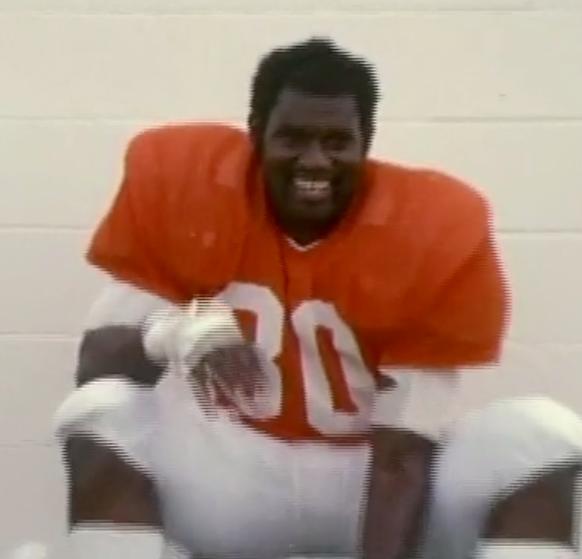
As a starting defensive end and all-America in 1969, Gunn starred on a USC unit that was named after the title of a popular shoot-‘em-up movie of the day, “The Wild Bunch”.

Gunn was selected in the 12th round of the 1970 NFL draft by the Chicago Bears and played seven seasons in the NFL.